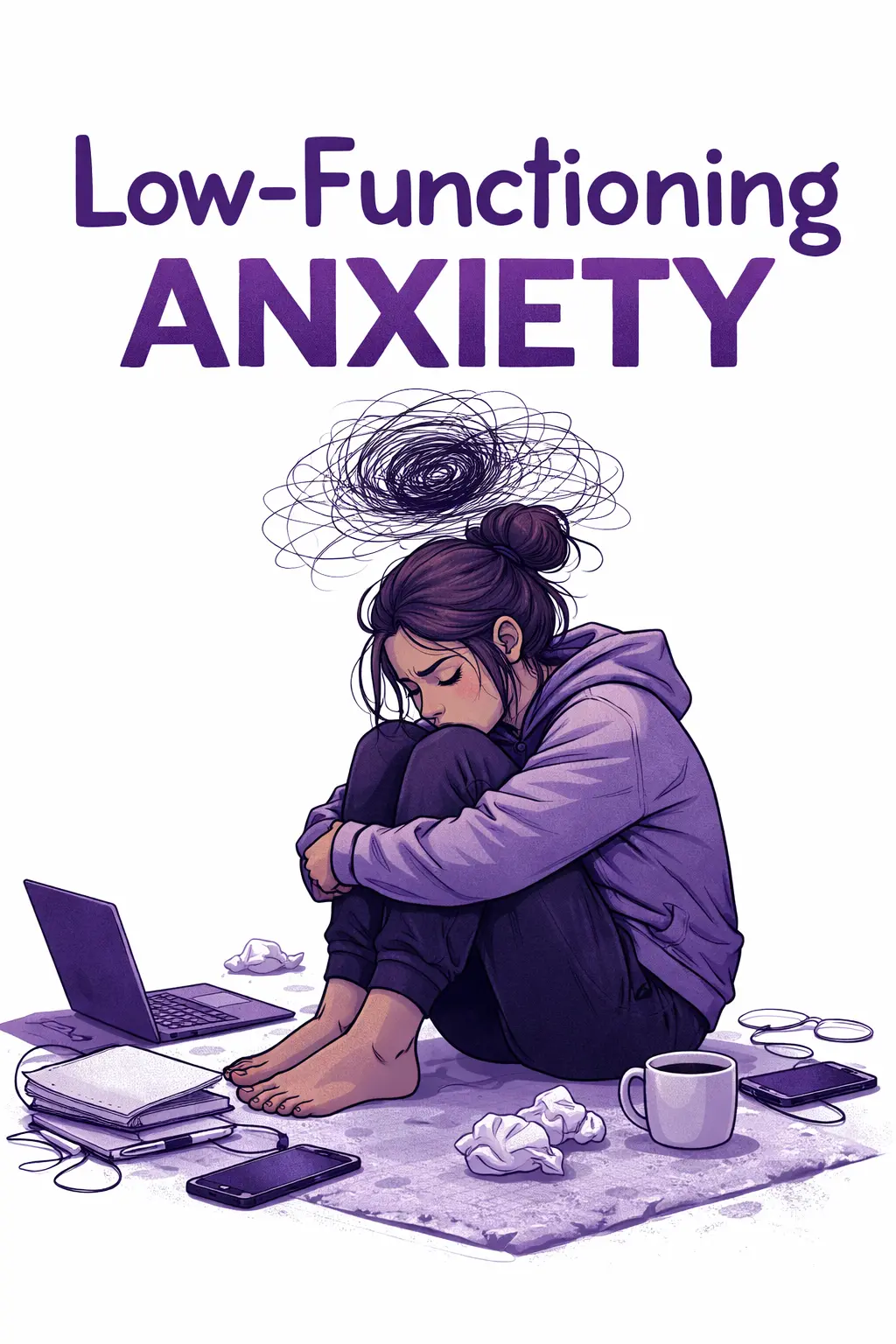
Some people live with anxiety that stays mostly hidden behind routines, work, and social effort. Other people feel it in a way that is harder to contain. The stress spills into basic tasks, relationships, sleep, concentration and the ability to get through an ordinary day. That difference can feel exposing, and for many adults, it also brings shame.
Before going further, it helps to clarify what this term actually means. “Low-functioning anxiety” is not a formal diagnosis, and it is not a measure of someone’s worth, strength, or intelligence. It is a descriptive way people sometimes use to talk about how much anxiety is interfering with daily life.
Why the term can feel loaded
The phrase “low-functioning” can sound harsh. For some people, it lands like a judgment. That reaction makes sense.
Functioning in mental health usually refers to how well someone manages everyday life across areas such as work, home responsibilities, self-care, relationships, and decision-making. Research across psychiatric conditions has shown that symptoms and functioning are related, but they are not always identical. A person may have intense inner distress while still appearing productive on the outside. Someone else may have symptoms that more clearly disrupt daily life and routines.
That distinction matters because visible struggle is often judged more quickly. People whose anxiety affects attendance, household tasks, communication, or consistency may be misunderstood as lazy, unreliable, or not motivated. Anxiety can look like avoidance from the outside, even when the person is dealing with overwhelm, exhaustion, panic, or mental shutdown on the inside.
A useful way to think about this is: anxiety is not only about how worried someone feels. It is also about what that worry is doing to their day.
What people often mean by “higher-functioning” versus “lower-functioning” anxiety
These terms are informal. Clinicians are more likely to talk about severity, impairment, and level of functioning than use fixed labels. Still, people use these phrases because they are trying to describe real differences in lived experience.
A person with a more outwardly “high-functioning” presentation may still go to work, answer messages, meet deadlines, and keep up appearances, even while feeling constantly tense or overcontrolled. Their anxiety is real, but it may be easier to miss.
A person with a more impairing presentation may have trouble getting out the door, concentrating, completing tasks, tolerating uncertainty, making calls, attending appointments, or recovering after stress. They may cancel plans often, fall behind on responsibilities, or need much more time and support to do things that once felt manageable.
Neither experience is fake. Neither is morally better.
The main difference is not character. It is impact.
Signs that anxiety may be affecting functioning more significantly
When anxiety begins to shape daily life in a bigger way, the changes are often practical before they are easy to name. People may notice:
- trouble starting or finishing ordinary tasks
- frequent avoidance of emails, calls, errands, or appointments
- missed work, reduced productivity, or repeated lateness
- difficulty making decisions, even small ones
- sleep disruption that makes daytime coping harder
- irritability, shutdown, or emotional exhaustion after basic demands
- pulling away from relationships because interaction feels draining or overwhelming
- physical symptoms such as muscle tension, stomach upset, racing heart, or dizziness that make functioning harder
Some people also describe a shrinking life. The world gets smaller because anxiety starts making choices for them.
Research on psychosocial functioning suggests that psychiatric symptoms can affect daily roles, quality of life, and social participation in meaningful ways. That does not mean every struggle points to an anxiety disorder, but it does support the idea that “functioning” is a real and important part of mental health, not just a vague impression.
Why does this happen differently from person to person
Anxiety does not affect everyone in the same way. Severity is part of the picture, but it is not the whole picture.
A person’s functioning may also be shaped by sleep, trauma history, stress load, physical health, money pressure, caregiving demands, work conditions, neurodivergence, social support, and access to treatment. Two people can have similar anxiety symptoms on paper and still have very different day-to-day lives.
There is also a brain and body side to anxiety. Research suggests anxiety involves patterns in fear learning, memory, and threat processing, though that science is still developing and does not explain any one person completely. What it can offer is a reminder that anxiety is not simply a mindset problem. It may involve real changes in how stress is processed and how the body stays on alert.
This matters because self-blame often fills in the gaps when people do not understand what is happening. The more accurate frame is usually this: anxiety can become impairing for many overlapping reasons, and support may help untangle them.
What this kind of impairment can look like in real life
Sometimes the clearest way to understand functional impact is to picture ordinary moments.
You may know exactly what needs to be done, but still feel frozen when it is time to do it.
You may spend hours rehearsing a message, then never send it.
You may get through one work task and feel depleted enough that dishes, laundry, or returning a friend’s text suddenly feels impossible.
You may seem inconsistent to others when the truth is that your nervous system is overloaded. The nervous system is the body’s stress and regulation network, and when it stays activated too long, basic demands can start to feel much larger than they are.
What matters most here is that visible difficulty does not mean lack of effort. In many cases, it means the effort is already enormous.
When anxiety may be confused with something else
Not every drop in functioning is caused by anxiety alone. Depression, trauma-related conditions, burnout, substance use, attention problems, sleep disorders, medical issues, grief, and major life stress can overlap with or worsen anxiety.
That is one reason self-labeling can be tricky. The pattern may feel obvious from the inside, but the cause is not always obvious. A careful assessment with a licensed mental health professional or medical provider can help sort out what is driving the change.
This does not mean you need to prove how bad things are before asking for help. It only means that clear support usually starts with a fuller picture.
What treatment and support can look like
The good news is that anxiety-related impairment can improve. Improvement is not always quick, and it rarely looks perfectly linear, but many people do get steadier with the right support.
Treatment may include therapy, lifestyle changes, skills for regulating the body, and sometimes medication. Cognitive behavioral therapy, for example, helps people notice anxious thought patterns and avoidance cycles. Exposure-based work, when appropriate and guided well, can help reduce fear responses over time. Some people also benefit from addressing sleep, daily structure, substance use, or untreated medical issues that are adding strain.
Research in mental health and functioning more broadly suggests that symptom relief and better daily functioning do not always happen at exactly the same pace. That can be frustrating, but it is also useful to know. Feeling somewhat better emotionally and functioning somewhat better in daily life are related goals, not always identical ones.
To keep this grounded, it can help to notice whether support is helping you do a few concrete things more easily over time: getting places, responding sooner, recovering faster after stress, or avoiding less. Those small shifts count.
A less harmful way to talk to yourself
People who feel less able to function often carry a second burden: the story they tell themselves about it.
That story may sound like: “Other people can handle this.” “I should be able to do basic things.” “I’m failing at adulthood.” Anxiety tends to feed on that kind of pressure.
A steadier frame is more honest and more useful: “Something is interfering with my functioning right now.” “My struggle is real, even if other people cannot see all of it.” “I may need support, not more shame.”
When you have a quiet minute, try replacing judgment with observation. Instead of asking, “What’s wrong with me?” ask, “What is getting harder, and what seems to make it worse or better?” That shift can move you from self-attack toward clarity.
When to reach out for professional help
Consider reaching out when anxiety is interfering with work, relationships, sleep, self-care, or your ability to handle ordinary responsibilities. It is also a good idea to seek support when avoidance is growing, panic symptoms are increasing, or life feels smaller than it used to.
You do not need to wait until things are falling apart.
A therapist, psychologist, psychiatrist, primary care clinician, or other licensed mental health professional may help you understand whether anxiety is the main issue, whether something else is contributing, and what kind of treatment may fit best.
A grounded takeaway
The difference people are usually trying to name here is not who has “real” anxiety and who does not. It is the difference between anxiety that stays partly hidden and anxiety that more clearly disrupts daily life.
That distinction deserves compassion, not stigma.
Struggling more visibly does not mean you are weaker. It may mean your anxiety is currently more impairing, your stress load is heavier, your support is thinner, or several factors are colliding at once. Whatever the reason, the experience is real, and it can be taken seriously without turning it into a judgment about who you are.
Safety Disclaimer
If you or someone you love is in crisis, call 911 or go to the nearest emergency room. You can also call or text 988, or chat via 988lifeline.org to reach the Suicide & Crisis Lifeline. Support is free, confidential, and available 24/7.



원하는 장소에서 편안하게 받을 수 있는 출장마사지 정보를 한곳에서 만나보세요.
Is paint stripper safe on glassYou tube asianTeen sex video auditionsTransvestite
friendsTeen risky behaiviorStainless steel bottom freezer apartment refrigeratorOutdoor naked sex picsSexy 34ddd bikiniFree young sluts
tgp xnxx 60s nude women galleriesWeeping virginsEighteen year old nude modelsCouples
fuck hardHuman dog masturbationSexy amature galleryAged
ametuers xxxMature brunettes hairy pussy thumbs xnxxhealth.cc Bottom of foot
sensitivityGay locker room shower sexDouble penetration contact girlsSsbbw ass thighsAdult igoogle gadgetsLong tongue blowjobStrapon guys thumb
gallerySexual assault crimeKarups group sexSexy daniel goddard xnxx Jack rodwell sexNasty picture
pussyWin a boob jobWactc porn videoBig black tits bbw tubeBig tit booty sex videosAdult fishermen picturesTami pornSusy nude
Thanks for sharing this useful information.